Key takeaways
- IEC 62271-202 governs prefabricated MV/LV substations, including enclosure temperature-rise class and internal arc classification.
- Temperature-rise classes K5 to K30 state the maximum permissible rise inside the enclosure above rated ambient.
- Internal arc classification IAC-A (accessible) or IAC-B (restricted) states which sides of the enclosure are protected against an internal arc fault.
- European-style compact substations and American box-type substations differ mainly in layout, access philosophy and typical transformer type.
- A complete quote request needs load, voltage levels, transformer rating, site conditions, IP/corrosion requirements and available footprint.
A compact prefabricated substation packages MV switchgear, a distribution transformer, and an LV panel into a single factory-built, factory-tested enclosure, cutting site installation time compared with a conventional brick-built substation room. IEC 62271-202 is the standard that governs how these units are built and classified — enclosure temperature-rise, internal arc protection, and degree of protection all carry specific codes worth understanding before requesting a quote. This guide walks through the classification system and the practical decisions a buyer needs to make.
What IEC 62271-202 covers
IEC 62271-202 is the international standard specifically for AC metal-enclosed and prefabricated high-voltage/low-voltage substations — as distinct from IEC 62271-200, which covers metal-enclosed MV switchgear on its own without the transformer and enclosure integration. It addresses:
- Enclosure construction and mechanical requirements
- Temperature-rise classification of the enclosure under rated load
- Internal arc classification (protection of personnel in the event of an internal fault)
- Degree of protection (IP rating) against solid objects and water ingress
- Routine and type testing requirements for the assembled unit
A compact substation built to IEC 62271-202 should be specified with a full classification string covering each of these, not just a headline “IEC 62271-202 compliant” claim, since the standard permits a wide range of enclosure performance within it.
Enclosure temperature-rise class (K5-K30)
The transformer and switchgear inside a sealed or semi-sealed enclosure generate heat that must escape without raising the internal air temperature so far that equipment ratings are compromised. IEC 62271-202 defines temperature-rise classes stating the maximum permissible internal temperature rise above the rated ambient, under full rated load, with natural or assisted ventilation:
| Class | Max internal temperature rise | Typical ventilation approach |
|---|---|---|
| K5 | 5 degrees C | Extensive ventilation openings or forced ventilation |
| K10 | 10 degrees C | Generous natural ventilation |
| K15 | 15 degrees C | Moderate natural ventilation |
| K20 | 20 degrees C | Standard natural ventilation |
| K25 | 25 degrees C | Reduced ventilation area |
| K30 | 30 degrees C | Minimal ventilation, typically compensated by transformer derating or oversizing |
A lower class number is not automatically “better” — it reflects a design trade-off between ventilation opening size (which affects ingress protection and noise) and internal component derating. A K30-classified enclosure with tighter ventilation may still perform correctly provided the transformer and switchgear are rated with that internal rise accounted for; the class simply tells the buyer what internal temperature to expect and design around.
Internal arc classification (IAC-A / IAC-B)
An internal arc fault — a short circuit occurring inside the switchgear or transformer compartment — releases energy that must be contained or vented safely away from personnel. IEC 62271-202 (drawing on the internal arc test methodology of IEC 62271-200) classifies enclosures by who may be near them and which sides are tested:
- IAC-A (Accessible): Used where the public or personnel without special training may be in the vicinity of the substation — for example, a unit at ground level in a public or semi-public area. All normally accessible sides of the enclosure must be demonstrated safe against an internal arc under test.
- IAC-B (Restricted access): Used where only trained, authorised personnel have access — for example, a fenced substation compound. The classification can be limited to the sides where access is expected, since unauthorised approach is controlled by other means (fencing, locked access).
The accessible sides are further identified by letters (commonly F for front, L for lateral/side, R for rear) stating exactly which faces were arc-tested, so “IAC AFLR” indicates all four sides tested for accessible-area use. Buyers should confirm which sides their site’s access arrangement actually requires — specifying full AFLR when the unit sits inside a fenced, restricted compound is unnecessary cost; specifying only front access (IAC AF) for a substation with public pedestrian access on more than one side is a genuine safety gap.
European vs American box-type layouts
Two broad layout philosophies dominate the compact substation market, and the right one depends on site access and local utility convention:
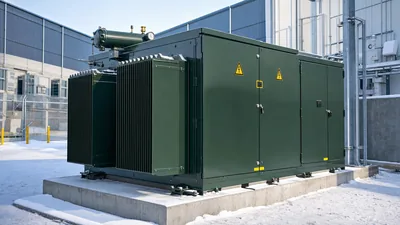
European-style compact substations typically use a multi-compartment enclosure — MV switchgear, transformer, and LV panel in separate but adjoining compartments — with the possibility of walk-in access for maintenance in larger units, or front/rear door access in smaller ones. These are common where the substation sits within a fenced compound or dedicated plant area with access available from more than one side.
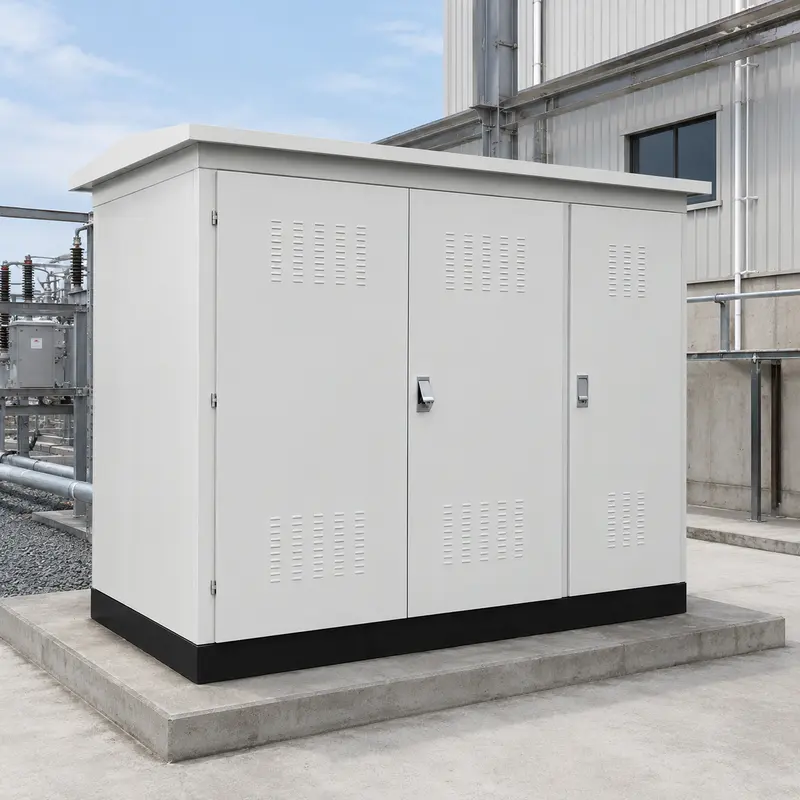
American-style box-type (pad-mounted) substations typically use a single dead-front enclosure where all operation, metering and cable access happens from the front face, with the rear and sides sealed and requiring no clearance for personnel access. This layout suits sites — parking areas, tight urban plots, roadside locations — where only front clearance can be guaranteed and rear/side approach is impractical or unsafe.
Neither layout is inherently more compact or higher-performing; the decision follows from available footprint, access direction, and the utility or local code convention the installation must match, since interconnecting equipment (cable systems, metering) is often standardised around one layout or the other in a given market.
Transformer choice inside the enclosure
The transformer inside a compact substation is most commonly oil-immersed, since the enclosure already provides weatherproofing and the oil’s cost and efficiency advantage is retained without exposing the surrounding area to outdoor oil-handling requirements beyond what the enclosure and any internal bund already manage. Where the compact substation is sited against or inside an occupied building, a cast-resin dry-type transformer is often specified instead, avoiding a flammable liquid inventory close to the structure — see our comparison of oil-immersed vs dry-type transformers for the full trade-off. MARS supplies both transformer types integrated into compact and box-type substation enclosures.
Ventilation, IP rating and corrosion protection
Beyond the K-class temperature rating, two further specifications matter for site suitability:
- IP rating: States protection against solid object ingress and water, following IEC 60529 (e.g. IP33, IP43). Coastal, industrial or dusty sites need a higher ingress rating than a clean, sheltered compound.
- Corrosion protection: Enclosure material (typically galvanised or painted steel, sometimes GRP) and coating system should match the site’s corrosivity category — a coastal or heavy-industrial site needs a higher-durability coating specification than an inland, low-pollution site, and this should be stated explicitly in the enquiry rather than left to a generic “outdoor rated” assumption.
Foundations and cable trench
Compact substations still need a prepared foundation — typically a reinforced concrete plinth or raft sized to the enclosure’s footprint and weight, with cable entry points (ducts or a trench) positioned to match the enclosure’s cable compartment layout. Foundation and trench design should be confirmed against the specific unit’s certified drawing before civil works begin, since cable entry position, plinth level and anchor points vary between suppliers and between the European and American-style layouts described above.
Factory testing and acceptance
Because a compact substation integrates switchgear and a transformer as a single assembled unit, factory testing before dispatch is what actually confirms the combination works as specified, rather than each component being tested in isolation. At minimum, expect routine testing on the transformer itself — winding resistance, ratio, insulation resistance, no-load and load loss, applied and induced voltage withstand, and partial discharge — alongside functional and dielectric testing of the switchgear and verification that the assembled enclosure meets its declared IP and, where applicable, internal arc classification. For projects where the specified transformer or switchgear rating is unusual, or where the buyer’s own standard calls for it, third-party or customer-witnessed factory acceptance testing (FAT) can be arranged before the unit ships, reducing the risk of a site-discovered defect after civil works are already committed.
What to send for a quote
A complete enquiry for a compact prefabricated substation should include:
- Required or estimated transformer kVA rating (see our transformer sizing guide and sizing calculator if this is not yet finalised)
- MV and LV voltage levels, and system frequency (50 Hz or 60 Hz)
- Required short-circuit rating for the switchgear
- Site altitude and ambient temperature range
- Required IP rating and corrosion protection category
- Available footprint, access direction, and preferred layout style (European multi-compartment or American box-type)
- Internal arc classification needed (IAC-A or IAC-B) based on public or restricted access
- Any local standard, utility interconnection requirement, or existing equipment the new unit must match (e.g. vector group for parallel operation)
How MARS can help
MARS manufactures compact and box-type substations to IEC 62271-202, integrating MV switchgear (including RMU and KYN28 options), an oil-immersed or dry-type transformer, and an LV panel in a single factory-tested enclosure, configurable for temperature-rise class, internal arc classification, IP rating and corrosion protection to suit the site. Browse the substation range or request a quote with the specification points above for a tailored proposal.
Frequently asked questions
What is IEC 62271-202?
IEC 62271-202 is the international standard for AC metal-enclosed and prefabricated high-voltage/low-voltage substations, covering enclosure construction, internal arc classification, temperature-rise class, degree of protection and factory testing for compact substation units combining switchgear and a transformer.
What do temperature-rise classes K5 to K30 mean?
They state the maximum temperature rise, in degrees C, permitted inside the substation enclosure above the rated ambient under full load, ranging from K5 (5 degrees C rise, best ventilated) to K30 (30 degrees C rise). A lower class number means more effective ventilation is required relative to the heat generated inside.
What is the difference between IAC-A and IAC-B classification?
IAC-A applies where the public or unqualified personnel may be near the enclosure, requiring all accessible sides to be protected against the effects of an internal arc fault. IAC-B applies where only authorised personnel have access, allowing a reduced protection scope on restricted-access sides.
What is the difference between European and American-style compact substations?
European-style compact substations typically use a walk-in or three-compartment layout with front and rear access for MV switchgear, transformer and LV panel, often ground-level pad-mounted. American-style box-type (pad-mounted) substations typically use a single dead-front enclosure with all access and operation from the front, suited to areas where rear or side clearance is limited.
Can a compact substation use either oil-immersed or dry-type transformer?
Yes. Outdoor compact substations commonly use an oil-immersed transformer for cost and efficiency, with the enclosure providing weatherproofing and fire risk management. Where the unit sits against or inside an occupied building, a dry-type transformer is often specified to avoid flammable liquid inside or near the structure.
What information does a supplier need to quote a compact substation?
Typically: rated load or transformer kVA, MV and LV voltage levels, short-circuit rating, site altitude and ambient temperature range, IP and corrosion protection requirements, available footprint and access direction, and any local standard or utility connection requirements specific to the site.
Tags: compact substation IEC 62271-202 prefabricated substation internal arc classification box-type substation