
33 kV/11 kV Distribution Substation
A 33 kV/11 kV step-down point in a growing city carries two competing demands. It has to absorb load growth without repeated outages, and it has to fit into a constrained urban plot alongside existing feeders.
One documented, delivered substation in Kenya — and fourteen representative configurations showing how MARS transformers, switchgear, substations and energy storage are specified for typical markets, climates and applications.

How to read this page. The Kenya project is a completed installation. Pages marked “Representative configuration” are engineering illustrations of a typical system for that country and application — they are not documentary records of a specific customer, contract or commissioning date. Each one states exactly what MARS can configure and what we need to quote a comparable system.
A 33 kV/11 kV step-down point in a growing city carries two competing demands. It has to absorb load growth without repeated outages, and it has to fit into a constrained urban plot alongside existing feeders.
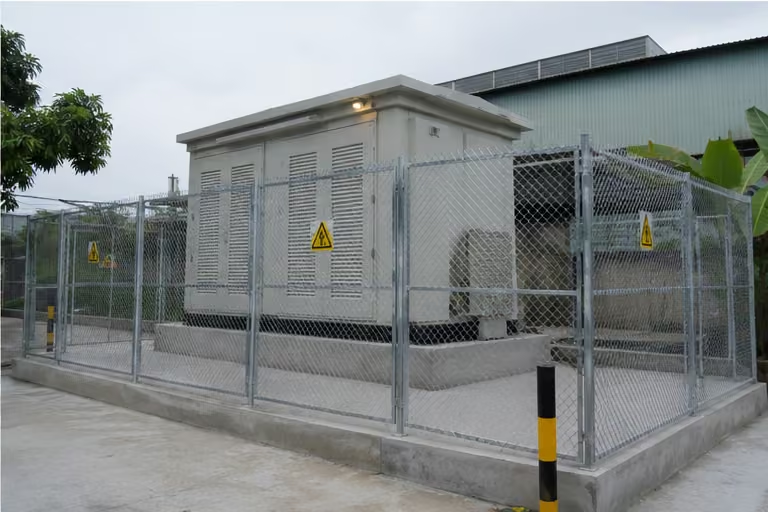
Vietnamese industrial supply is typically taken at 22 kV, and a manufacturing plant needs that stepped down to 0.4 kV as close to the load centre as the site allows. Distance costs money twice: in LV copper, and in voltage drop that erodes motor starting performance.
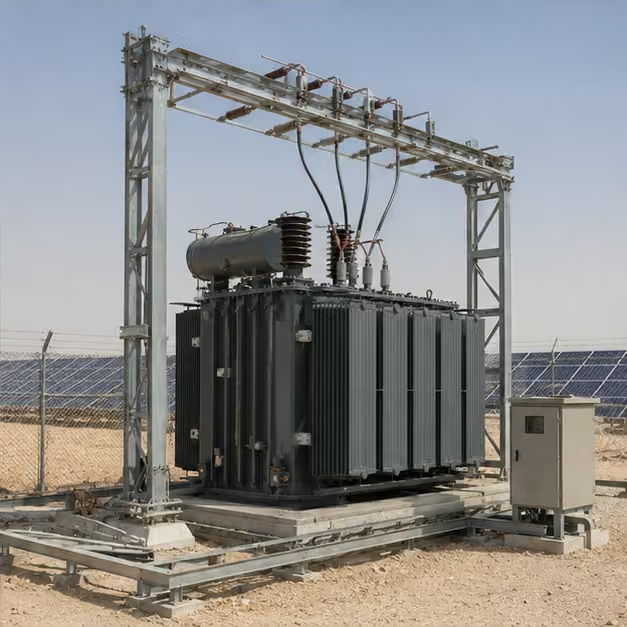
A transformer bay at a Saudi photovoltaic plant works in three conditions that a general-purpose distribution unit is not designed around.
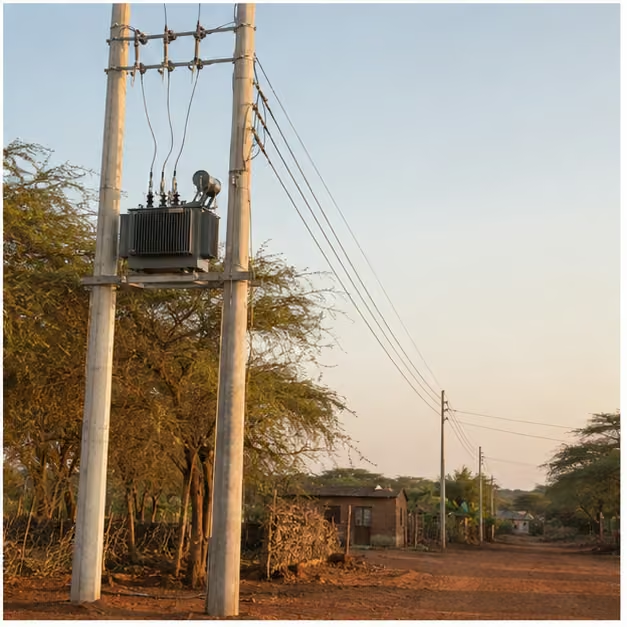
Rural electrification is a voltage-drop and loss problem before it is an equipment problem. Loads are small, scattered and separated by kilometres, so the network's job is to carry 11 kV as far as possible and convert to 0.4 kV as close to the consumers as it can.
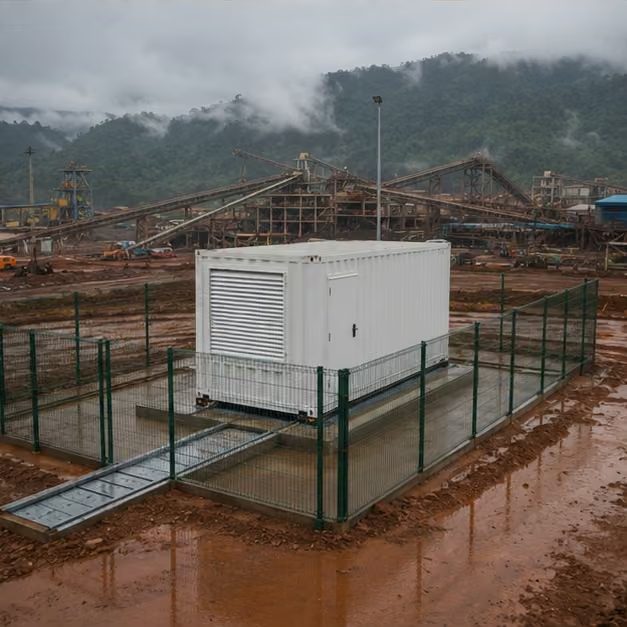
Indonesian distribution runs at 20 kV, and a mining or mineral-processing site takes that supply at the edge of a network where support is hours away. Three things follow from that.
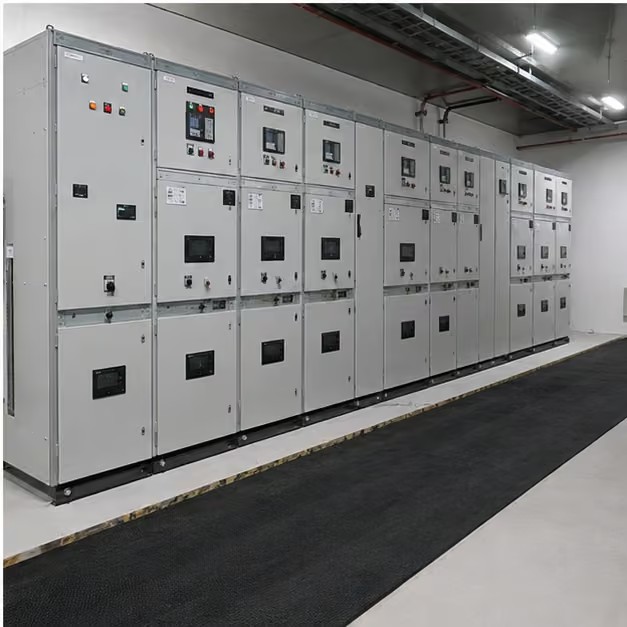
An 11 kV intake serving a large commercial complex in the UAE is not a difficult switching problem. It is a thermal and corrosion problem wrapped around a switching problem, and it is that combination which sets the specification.
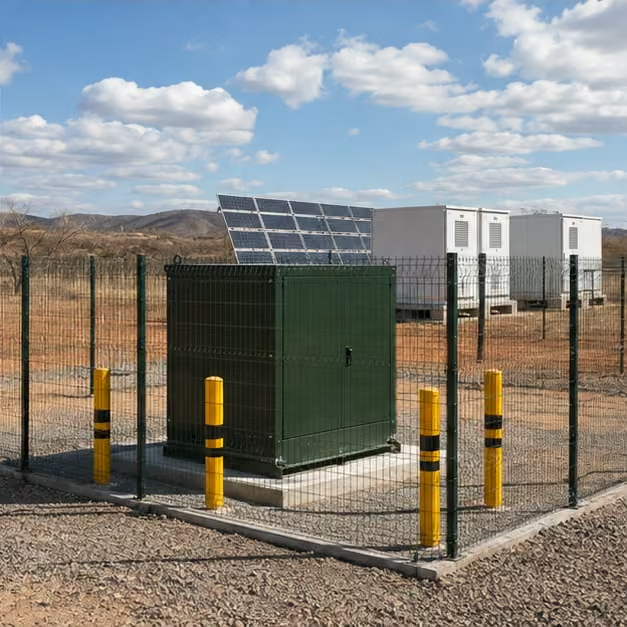
A Brazilian utility PV plant collects at 34.5 kV. That single number shapes the whole design.
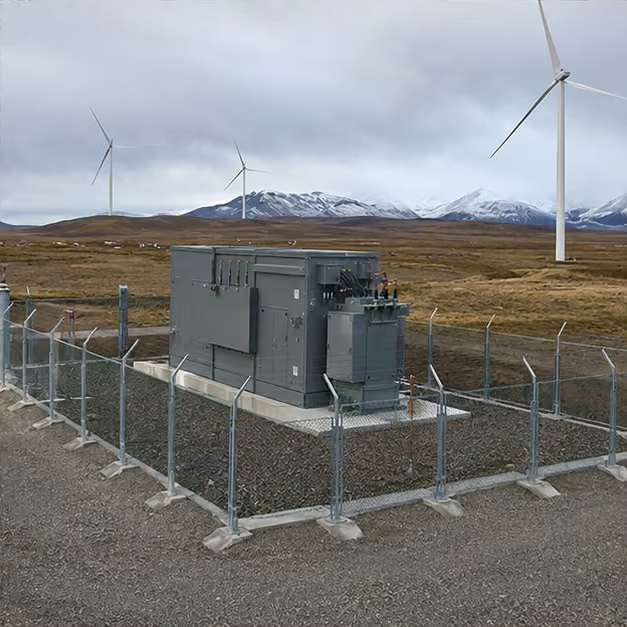
A wind farm in southern Chile puts three constraints on a substation before any electrical question is asked: how it gets there, what the wind does to it, and what the cold does to it.
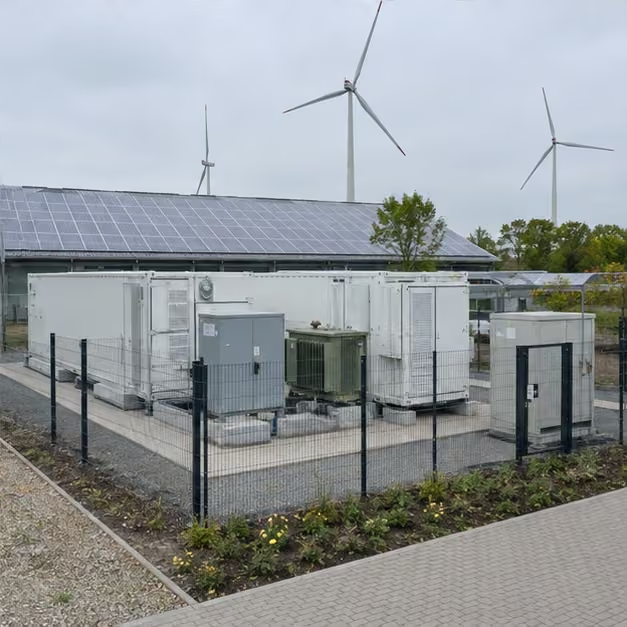
A battery system connected in Germany faces a regulatory environment that is stricter and more explicit than most, and the specification has to be built around it from the start rather than adapted afterwards.
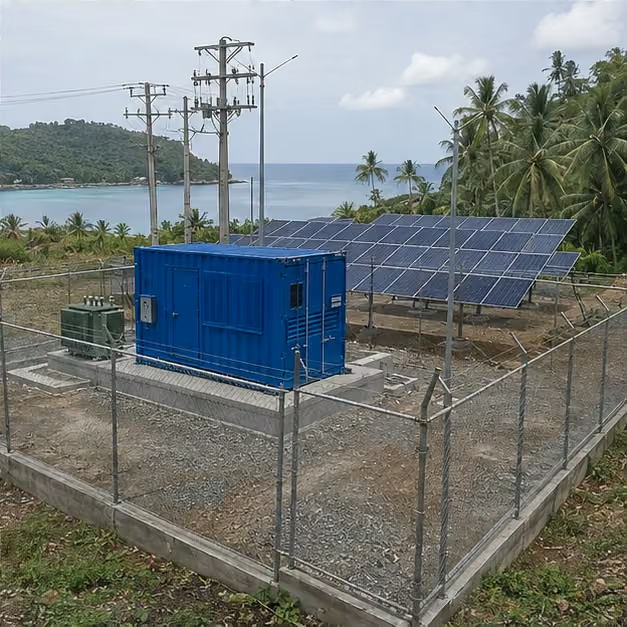
The Philippines uses ANSI/IEEE practice through the Philippine Electrical Code, so 13.8 kV is a 15 kV class system at 60 Hz — not an IEC 15 kV system with different insulation levels, clearances and equipment ratings. Getting that right at the enquiry stage avoids specifying a transformer and switchgear that are electrically correct but dimensionally and dielectrically wrong for the network they must connect to.
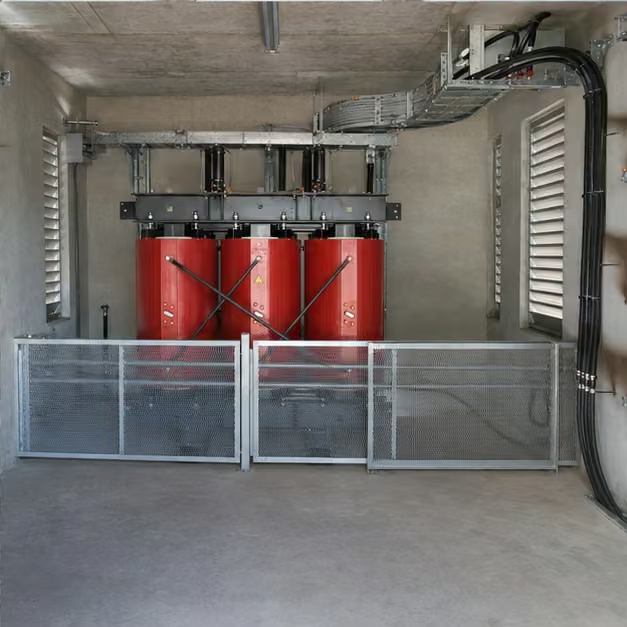
A South African mining transformer is not specified against bare IEC. The buying practice is Eskom's NRS documents and the SANS adoptions built on them, and the two are not interchangeable.
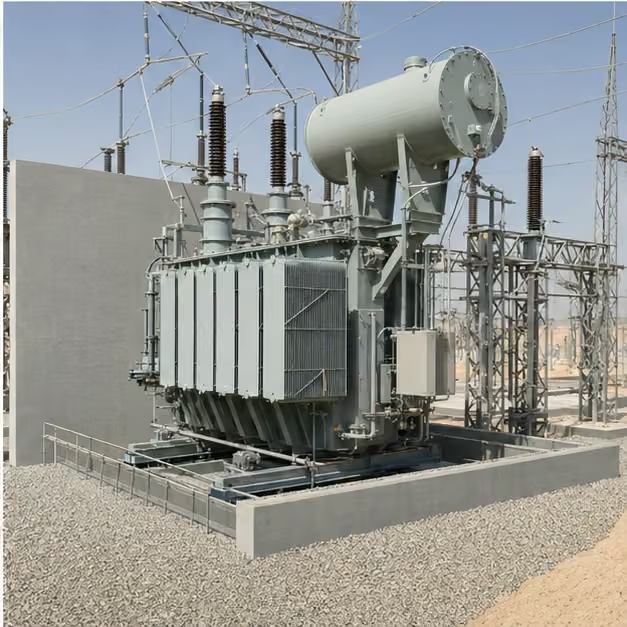
At 66 kV this is a sub-transmission grid transformer, not a distribution unit, and that changes the specification in four connected ways.
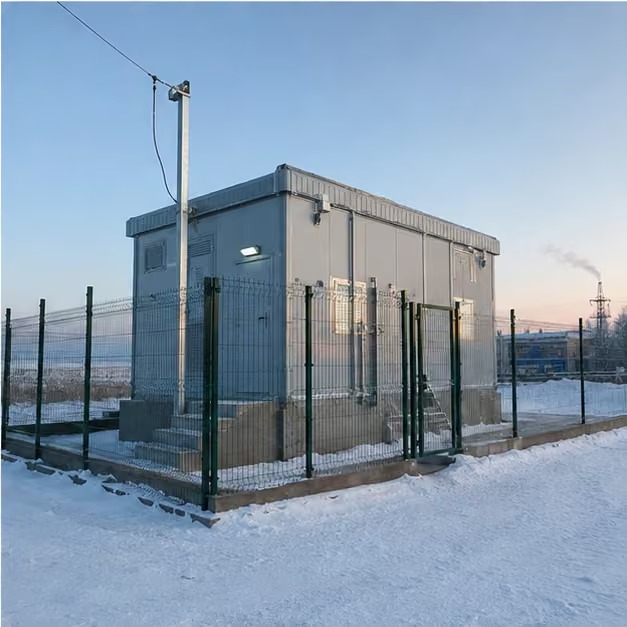
The specification that matters in Kazakhstan is not the low temperature on its own. It is the annual swing.
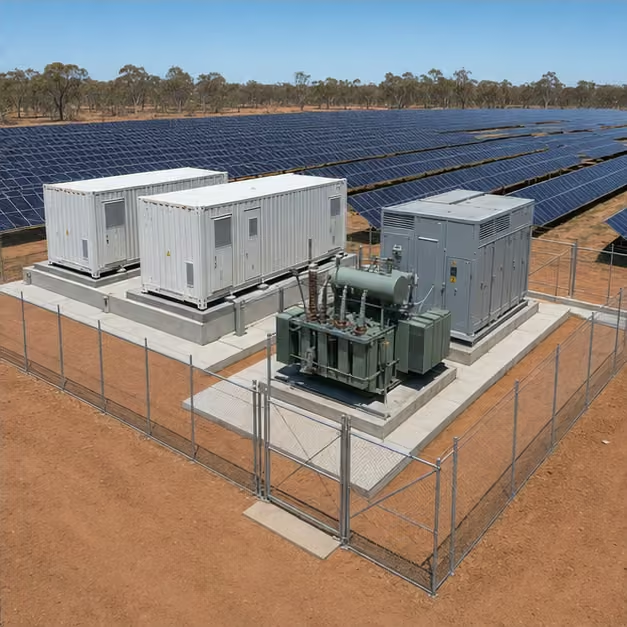
Three things shape a storage system for this market, and one of them is not electrical.
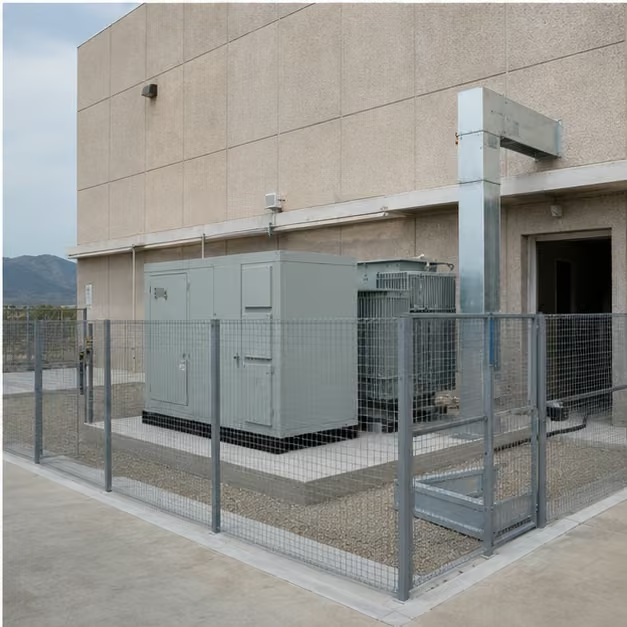
Mexico is an ANSI market on a 60 Hz system, and both halves of that sentence change the equipment. The 480 V secondary is a North American industrial voltage, so the LV switchgear, motor control and bus duct follow ANSI/IEEE and NEMA practice rather than the IEC 400 V conventions used elsewhere.
Send the single-line diagram, voltages, fault level and site conditions. We reply with a configuration and a quotation.