Key takeaways
- Oil regeneration services remove polar oxidation compounds, acids, and sludge from aged insulating oil using reactivable sorbent media such as bauxite or Fuller's earth.
- Unlike mechanical purification, chemical regeneration restores oil colour, interfacial tension above 40 mN/m, and acidity below 0.03 mg KOH/g in accordance with IEC 60422.
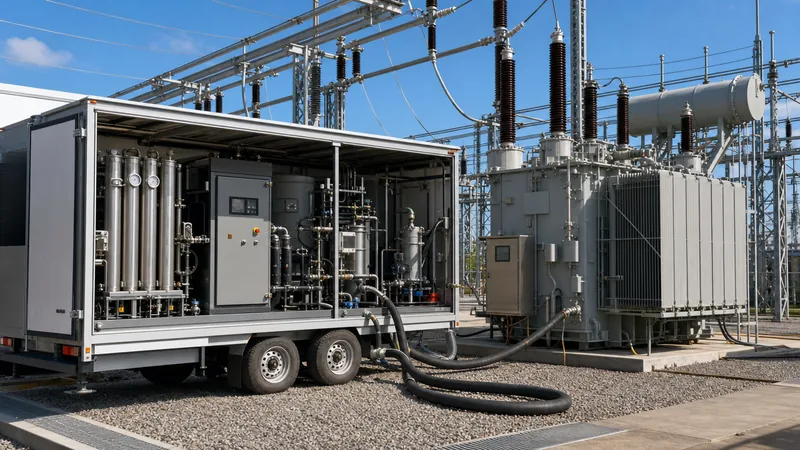
- The transformer oil regeneration process can be executed on-site while the transformer remains energised, stripping aged core and coil winding sludge without taking the substation offline.
- Regenerating dielectric mineral oil lowers carbon emissions by up to 85% compared to refining and transporting virgin mineral naphthenic oil.
- Economic payback typically occurs immediately on transformers containing more than 5,000 litres of oil compared to complete oil drain, disposal, and replacement.
Quick answer: Professional oil regeneration services chemically reclaim degraded transformer mineral oil by cycling it through activated adsorbent beds, removing dissolved decay products, carboxylic acids, and sludge that conventional vacuum dehydration cannot touch. This reclamation process restores the oil's chemical, physical, and dielectric properties to match or exceed new oil specifications per IEC 60422, extending overall transformer asset life at roughly half the cost of replacement fluid.
As oil-filled power and distribution transformers age under thermal and electrical stress, atmospheric oxygen and internal heat oxidise the liquid insulation. This chemical breakdown generates peroxides, low-molecular-weight acids, aldehydes, and colloidal sludge. While standard filtration systems handle free moisture and particulate contamination—as detailed in our transformer oil purification guide—they leave aggressive dissolved aging byproducts untouched. When oil reaches an advanced state of deterioration, utilities and industrial facility operators require specialized oil regeneration services to extract polar compounds and de-sludge winding cellulose before irreversible dielectric breakdown occurs.
What Are Oil Regeneration Services and How Do They Differ from Purification?
Professional oil regeneration services utilise chemical adsorption to eliminate soluble polar contaminants, whereas mechanical purification relies strictly on physical filtering, thermal degassing, and vacuum dehydration.
Mechanical purification addresses physical contaminants: suspended particulate matter (measured via ISO 4406 cleanliness codes), dissolved moisture (measured via Karl Fischer titration ASTM D1533), and dissolved gases (ASTM D3612). However, purification cannot break the chemical bonds of soluble aging products. Carboxylic acids, resinous soaps, and polar oxidation markers stay dissolved in the liquid matrix. Left untreated, these acids catalyse further cellulose degradation in the solid kraft paper insulation, directly reducing the transformer's remaining operational life.
In contrast, transformer oil regeneration—also known as oil reclamation—passes the heated dielectric fluid through a microporous adsorbent bed, typically composed of activated bentonite (Fuller's earth), attapulgite clay, or synthetic alumina. The polar oxidation molecules, which possess high dielectric affinity and surface tension activity, bind to the adsorbent medium. The effluent oil emerges clarified, with restored colour, suppressed dielectric loss factor (tan delta), diminished neutralisation numbers, and restored interfacial tension.
Key Degradation Indicators: When Does Transformer Oil Require Regeneration?
A transformer requires oil regeneration services when its neutralisation number exceeds 0.15 mg KOH/g or its interfacial tension drops below 22 mN/m under standard diagnostic testing.
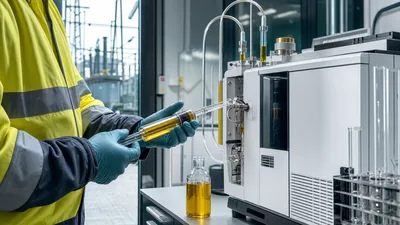
Asset managers should monitor oil health via regular laboratory diagnostics as outlined in our transformer oil testing standards guide. When tracking fluid degradation in a typical oil filled transformer, the international standard IEC 60422 ("Mineral insulating oils in electrical equipment – Supervision and maintenance guide") and IEEE C57.106 categorise oil condition into three distinct action bands: Good, Fair, and Poor. The primary chemical and electrical indicators dictate the exact corrective intervention required:
- Total Acid Number (TAN): Also termed neutralisation value (IEC 62021-1 / ASTM D974). New oil holds an acidity below 0.01 mg KOH/g. When TAN passes 0.10 mg KOH/g, sludge formation begins. At TAN > 0.20 mg KOH/g, aggressive corrosion of internal copper windings and steel surfaces accelerates rapidly, demanding immediate regeneration.
- Interfacial Tension (IFT): Measured via ASTM D971 or ISO 6295 against water at 25 °C. Fresh oil exhibits an IFT of 40 to 50 mN/m. As polar hydrophilic molecules accumulate, IFT collapses. Readings below 20 mN/m indicate advanced oxidation and saturated sludge precipitation into cooling ducts.
- Dielectric Dissipation Factor (Tan Delta / DDF): Measured at 90 °C under IEC 60247 or ASTM D924. Dissolved polar contaminants elevate dielectric heating and losses. Values exceeding 0.10 (10%) signify heavy ionic contamination.
- Colour and Visual Appearance: ASTM D1500 grades fluid from 0.5 (clear/pale yellow) to 8.0 (dark brown/black). Darkening signifies polymerisation and suspended carbonised colloids.
- Corrosive Sulphur Presence: Regenerative sorbents modified with specialised passivators can also sequester dibenzyl disulphide (DBDS) compounds, mitigating copper sulphide formation per IEC 62535.
Before commissioning regeneration on older assets, operators must also verify that polychlorinated biphenyls remain within regulatory thresholds, following the analytical protocols documented in our guide on PCB transformer oil regulations and testing.
The Transformer Oil Regeneration Process: Step-by-Step
The transformer oil regeneration process comprises continuous thermal vacuum conditioning, chemical percolation through regenerable sorbent beds, on-site clay reactivation, and synthetic antioxidant reinhibition.
Modern mobile reclamation plants execute this procedure as a closed-loop system directly connected to the transformer's top and bottom drain valves. The complete engineering cycle proceeds through the following structured sequence:
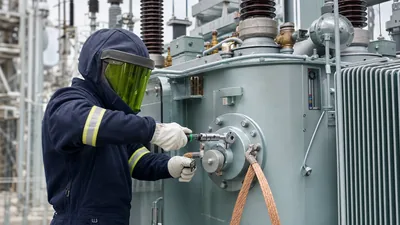
- Fluid Extraction and Pre-Heating: Degraded oil is extracted from the base drain valve of the transformer tank using positive displacement or centrifugal pumping skids. The fluid enters an indirect low-watt-density electric heater (operating under 1.5 W/cm² to prevent local thermal cracking), elevating oil temperatures to between 60 °C and 75 °C. Elevated temperature lowers viscosity and accelerates the desorption kinetics of aging compounds.
- Primary Micro-Filtration: The heated fluid passes through particulate depth filter cartridges, removing coarse solids and metal wear debris down to 1 to 5 microns absolute rating before reaching the sorbent columns.
- Adsorbent Bed Percolation: The fluid percolates through multiple parallel-series columns filled with active Fuller's earth or bauxite. The polar oxidation molecules—including carboxylic acids, esters, ketones, and dissolved sludge precursors—are captured inside the porous sub-nanometre matrix of the clay via physical adsorption and chemisorption.
- In-Situ Sorbent Reactivation: While traditional reclamation systems required costly manual disposal of spent clay, advanced modern plants feature closed-loop thermal reactivation. Once the column clay becomes saturated, the oil is drained back to the transformer, and the reactivation system initiates a controlled pyrolytic combustion cycle inside the column vessel. Air is drawn through the bed at 500 °C to 650 °C, burning off the trapped organic contaminants into harmless exhaust gases. This restores the clay to full adsorption capacity for up to 300 cycles without replacing media.
- High-Vacuum Degassing and Dehydration: The de-acidified oil flows into a multi-stage vacuum degasser operating at absolute chamber pressures below 1 mbar (0.1 kPa) with thin-film dispersion trays. This flash-evaporates residual moisture to below 10 mg/kg (ppm) and extracts dissolved oxygen and nitrogen to under 0.25% by volume.
- Antioxidant Re-Inhibition: Because the aggressive adsorption process strips naturally occurring phenolic inhibitors along with contaminants, synthetic oxidation inhibitor—typically 2,6-di-tert-butyl-p-cresol (DBPC / BHT per IEC 60666)—is precisely dosed into the return line, raising inhibitor concentration back to the standard 0.3% to 0.4% by weight.
- Continuous Flushing and Core Washing: The polished oil returns through the top conservator or upper inspection valve. By repeatedly circulating hot, active oil through the transformer tank for 6 to 12 complete volume passes, the fluid acts as a chemical solvent, dissolving sticky sludge off the solid paper insulation, core laminations, and cooling radiators.
Technical Comparison: New Oil vs. Purified Oil vs. Regenerated Oil
Regenerated transformer oil achieves chemical and dielectric metrics equivalent to virgin mineral oil while significantly outperforming conventionally purified oil across all long-term aging parameters.
The following performance matrix contrasts standard technical parameters across the three fluid states in an operational 110 kV power transformer asset, referencing limits defined in IEC 60296 and IEC 60422:
| Dielectric / Chemical Parameter | Degraded Oil (Pre-Treatment) | Purified Oil (Vacuum Dehydration Only) | Regenerated Oil (Adsorption + Re-inhibited) | Virgin Mineral Oil (IEC 60296 Unused) |
|---|---|---|---|---|
| Breakdown Voltage (kV / 2.5 mm) | 25 – 35 | 65 – 75 | 70 – 80 | > 70 |
| Total Acidity (mg KOH/g) | 0.25 – 0.45 | 0.24 – 0.42 | < 0.02 | < 0.01 |
| Interfacial Tension (mN/m @ 25 °C) | 16 – 21 | 17 – 22 | 42 – 48 | > 40 |
| Dielectric Dissipation Factor (90 °C) | 0.080 – 0.250 | 0.060 – 0.180 | 0.002 – 0.005 | < 0.005 |
| Water Content (mg/kg or ppm) | 35 – 55 | < 10 | < 8 | < 10 |
| Oil Colour Index (ASTM D1500) | 5.0 – 7.0 (Dark Amber) | 4.5 – 6.5 (Dark Amber) | 0.5 – 1.0 (Pale Yellow) | < 0.5 (Clear) |
| Sludge Content (% by mass) | > 0.05 | > 0.04 | Non-detectable | Nil |
| Relative Cost Baseline | Baseline (Failing) | 20% – 30% | 45% – 55% | 100% (Replacement) |
As evident from the empirical data, mechanical purification achieves immediate dielectric withstand strength by removing free moisture and particulates, but does not alter fluid acidity or interfacial tension. Oil regeneration services completely renew the oil's chemical equilibrium, ensuring the insulation medium actively protects the transformer winding paper against hydrolytic and oxidative cleavage.
Economic and Operational Advantages: On-Site Energised Reclamation
On-site energised oil regeneration eliminates planned substation outages, halves fluid management costs, and slashes the Scope 3 carbon footprint associated with mineral oil disposal.
Traditional fluid replacement requires de-energising the transformer, vacuum-draining several tonnes of oil into road tankers, disposing of the hazardous fluid per local environmental regulations, flushing the internal core, and pumping in fresh naphthenic oil. This generates major operational challenges:
- Elimination of Grid Downtime: Modern regeneration rigs utilise positive-pressure safety interlocking systems, continuous oil-level monitoring, gas-bubble detection, and automatic shutdown valves. This allows the regeneration process to run while the transformer is fully loaded and energised, keeping industrial processes or regional transmission grids in active service.
- Deep Core and Cellulose Desludging: Simply draining oil leaves up to 15% of the old, contaminated oil trapped inside the paper insulation, wooden clamping structures, and radiator dead-zones. When fresh oil is poured into an uncleaned tank, this residual acidity leaches into the new fluid, degrading its properties within 6 to 18 months. Continuous hot regenerated oil circulation dissolves and removes this trapped sludge matrix directly from the winding surfaces.
- Significant Cost Savings: Replacing 30,000 litres of transformer oil entails substantial procurement costs, transport logistics, crane hire, hazardous waste management levies, and potential downtime penalties. Regeneration services generally execute at 40% to 60% of the total cost of fluid replacement.
- Sustainability and ESG Metrics: The re-refining and combustion of mineral oils generate roughly 1.8 to 2.2 kg of CO₂ equivalent per litre. By extending the operational life of existing oil stock indefinitely through closed-loop reactivation, asset owners reduce life-cycle environmental impact by up to 85%.
Next steps: specifying and sourcing
When specifying oil regeneration services for your substation assets, prepare complete laboratory oil test certificates showing current breakdown voltage, water content, total acidity, interfacial tension, and DDF/Tan Delta at 90 °C, along with the transformer nameplate rating, oil volume, and site accessibility constraints. If test reports indicate advanced insulation embrittlement or irreparable core damage, replacement with a modern high-efficiency power transformer or robust oil-immersed transformer may represent the most cost-effective long-term engineering solution. For turnkey equipment specifications, technical project assessments, or detailed equipment quotations, submit your asset parameters directly via our transformer quotation portal.
Frequently asked questions
What is the difference between transformer oil filtration and oil regeneration?
Filtration mechanically removes physical water, gases, and particulate matter via vacuum dehydration, whereas regeneration chemically strips dissolved acids, oxidation products, and sludge using adsorbent media.
Can transformer oil regeneration be performed while the transformer is energised?
Yes, mobile regeneration plants equipped with automated flow control, bubbler traps, and fail-safe trip interlocks can safely circulate and reclaim oil on fully energised transmission and distribution transformers.
How many times can transformer oil be regenerated?
Transformer mineral oil can theoretically be regenerated indefinitely, provided the base hydrocarbon structure has not undergone severe thermal cracking or catastrophic electrical arcing breakdown.
Does regeneration remove corrosive sulphur from transformer oil?
Yes, specialised sorbent media blends combined with selective passivator additives eliminate reactive sulphur species, including dibenzyl disulphide (DBDS), preventing dangerous copper sulphide deposition on winding papers.
How long does the transformer oil regeneration process take?
A complete on-site regeneration process typically takes between 24 and 72 hours depending on fluid volume, operating temperature, initial acidity, and the degree of core sludge buildup.
Tags: oil regeneration services transformer oil regeneration transformer oil regeneration process dielectric fluid reclamation transformer maintenance