Key takeaways
- A standard single-phase residential transformer typically steps down medium-voltage distribution (11 kV to 34.5 kV) to 120/240 V split-phase power for domestic consumer loads.
- Factory equipment costs for a single-phase residential transformer range from $1,800 to $5,500 for pole-mounted units and $3,500 to $9,000 for pad-mounted residential transformer boxes.
- Pad-mounted residential transformers must comply with tamper-resistance and enclosure security requirements defined in IEEE C57.12.28 and ANSI standards.
- Proper transformer sizing applies a coincidence diversity factor to connected residential loads to balance efficiency and prevent thermal insulation degradation.
- Total electrical transformer cost including civil concrete pads, trenching, conduit, and utility grid interconnection fees typically ranges between $8,000 and $25,000.
Quick answer: A residential transformer steps down medium-voltage utility distribution power (typically 11 kV to 34.5 kV) to domestic supply voltages, such as 120/240 V split-phase or 230/400 V three-phase. Factory purchase prices range between $1,800 and $9,000 depending on kVA capacity and mounting configuration, while complete turnkey installation costs typically reach $8,000 to $25,000.
In electrical power distribution networks, a residential transformer serves as the critical final link between the high-capacity utility distribution grid and individual domestic consumers. Whether configured as a pole-mounted unit or an underground pad-mounted enclosure, these liquid-immersed transformers are engineered to deliver reliable, low-noise voltage reduction around the clock. For housing developers, municipal planners, and utility contractors, understanding the technical parameters, equipment selection, and overall transformer price is essential for modern residential electrification projects.
What Is a Residential Transformer and How Does It Work?
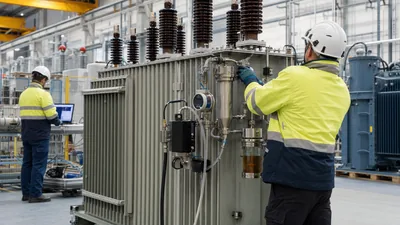
A residential transformer, commonly referred to by homeowners as a house transformer, is a step-down distribution transformer designed to convert medium distribution voltages into consumer-safe secondary voltages. In North American split-phase systems, primary feeder lines operating at 4.16 kV up to 34.5 kV deliver power across overhead lines or underground conduits directly to the transformer primary bushings. The transformer uses magnetic induction between its high-voltage (HV) and low-voltage (LV) windings around a grain-oriented silicon steel core to step the voltage down to 240 V across the outer winding terminals, with a grounded neutral centretap providing two separate 120 V legs.
In European, Commonwealth, and IEC-standard territories, domestic networks often utilise three-phase medium-voltage feeders stepping down to 230 V single-phase (phase-to-neutral) or 400 V three-phase (phase-to-phase) through dyn11 or Yyn0 vector arrangements. Regardless of the regional network configuration, modern residential units are manufactured in accordance with standards such as IEEE C57.12.00 or IEC 60076. These units feature mineral insulating oil or synthetic ester fluids that serve dual purposes: dielectric insulation between closely packed conductor layers and convection-driven heat dissipation through the tank walls.
Pad-Mounted vs Pole-Mounted: Choosing the Right Residential Transformer Box
The choice between an overhead pole-mounted unit and an underground residential transformer box depends on housing density, aesthetic ordinances, and utility network topography. Overhead pole-mounted transformers are suspended on wood, concrete, or steel utility poles, connecting directly to open aerial conductors. These units offer lower initial civil construction costs and straightforward visual inspection for maintenance personnel. For in-depth overhead mechanical criteria, review our power pole transformer guide.
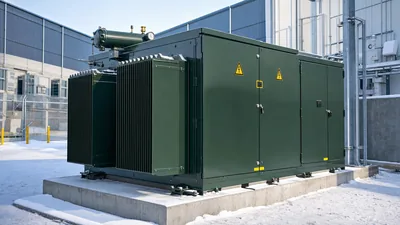
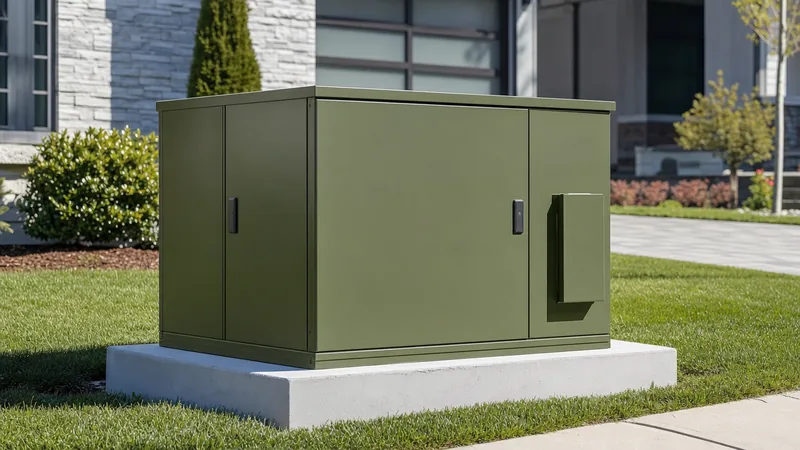
Conversely, modern suburban subdivisions increasingly mandate underground residential distribution (URD) systems utilising a tamper-resistant residential transformer box mounted at ground level on a precast concrete plinth. These pad-mounted units enclose all medium-voltage and low-voltage bushings, fuses, and switching gear inside locked, weather-resistant mild steel or stainless steel cabinets. When specifying these units, engineers must assess compliance with IEEE C57.12.28 standards for enclosure tamper resistance to prevent unauthorised public access. Learn more about regional construction nuances in our guide to pad-mounted transformers ANSI vs IEC designs, or examine cabinet layouts in our detailed review of the electrical transformer box.
How Much Does a Residential Transformer Cost?
When evaluating how much does a residential transformer cost, buyers must distinguish between base factory equipment costs and turnkey project expenses. The ex-works transformer price for a standard single-phase 25 kVA to 50 kVA pole-mounted transformer typically ranges from $1,800 to $4,200, whereas an equivalent pad-mounted residential transformer box ranges from $3,500 to $7,800 due to heavier cabinetry, internal bay-o-net fusing, and radial/loop-feed loadbreak switching mechanisms.
When prospective buyers ask how much do transformers cost on a fully installed basis, civil construction, medium-voltage cable trenching, concrete pads, and utility connection fees must be included. Total electrical transformer cost for an underground residential installation routinely reaches $10,000 to $25,000 per site. The following table provides realistic factory equipment pricing and physical parameters for typical distribution capacities:
| Apparent Power (kVA) | Mounting Type | Primary Voltage (kV) | Secondary Voltage (V) | Factory Equipment Price (USD) | Approximate Weight (kg) |
|---|---|---|---|---|---|
| 15 kVA | Pole-mounted | 7.2 – 14.4 | 120/240 | $1,500 – $2,200 | 110 – 140 |
| 25 kVA | Pole-mounted | 7.2 – 19.9 | 120/240 | $1,800 – $2,800 | 150 – 190 |
| 50 kVA | Pole-mounted | 7.2 – 24.9 | 120/240 | $2,600 – $4,200 | 260 – 320 |
| 25 kVA | Pad-mounted | 12.47 – 24.94 | 120/240 | $3,500 – $5,200 | 380 – 450 |
| 50 kVA | Pad-mounted | 12.47 – 34.5 | 120/240 | $4,800 – $7,200 | 520 – 610 |
| 75 kVA | Pad-mounted | 12.47 – 34.5 | 120/240 | $6,000 – $8,500 | 650 – 760 |
| 100 kVA | Pad-mounted (3-phase) | 11.0 – 34.5 | 208Y/120 or 400/230 | $7,500 – $11,000 | 850 – 1,100 |
Factors influencing electric pole transformer cost and pad-mount pricing include winding material (copper versus electrical-grade aluminium), energy efficiency standards (such as US DOE 2016 or EU Ecodesign Tier 2), and optional corrosion-resistant 304L stainless steel tank construction for coastal developments.
Sizing and Engineering Specifications for Residential Deployments
Sizing a residential distribution transformer requires calculating total connected consumer load while applying realistic coincidence diversity factors. Under-sizing causes excessive operating temperatures, oil degradation, and premature winding failure, while severe over-sizing increases continuous core no-load excitation losses paid by the distribution asset owner. Engineers should consult our comprehensive transformer sizing calculator guide when determining peak kVA requirements.
Key parameters required in any manufacturing procurement schedule include:
- Rated Capacity (kVA): Typically 25 kVA to 50 kVA for single-family residences (serving 2 to 8 homes depending on climate zones and continuous air-conditioning loads).
- Basic Impulse Insulation Level (BIL): Critical for lightning and surge protection, typically 60 kV to 150 kV BIL for distribution-class equipment under IEEE C57.12.00.
- Percent Impedance (%Z): Standard values range between 1.8% and 3.5% for residential distribution transformers, restricting available fault current at consumer distribution boards while controlling voltage regulation during motor starts.
- Efficiency and Loss Ratios: Maximum permissible no-load core losses (watts) and full-load winding losses specified to meet national carbon footprint and network revenue guidelines.
Installation Requirements and Earthing Procedures
Installing a residential transformer safely requires strict adherence to local electrical utility standards and National Electrical Safety Code (NESC) or NFPA 70 (NEC Article 450) clearances. For ground-mounted units, minimum setback clearances of 1.5 to 3.0 metres from combustible walls, windows, and property boundaries prevent fire spread in the unlikely event of an internal fault.
- Civil Foundation Preparation: Excavate below the frost line and pour a steel-reinforced concrete pad or seat an approved structural composite box-pad with integral conduit cutouts.
- Cabinet Positioning and Levelling: Rig and position the transformer tank onto the plinth, verifying level tolerances within 2 degrees to preserve designed internal oil levels over core components.
- Earthing and Ground-Grid Connection: Drive two or more copper-bonded ground rods (minimum 2.4 m length, 16 mm diameter) and bond them using bare stranded copper conductor to the transformer tank earthing pad, achieving an earthing resistance of under 10 ohms (or under 5 ohms where specified).
- Primary Cable Termination: Install deadbreak or loadbreak medium-voltage elbow connectors onto the epoxy high-voltage bushings, ensuring correct cable shielding and grounding.
- Secondary Service Drop Termination: Secure low-voltage copper or aluminium cables into the secondary screw spade terminals, torque-testing every mechanical connector to factory values.
- Pre-Commissioning Testing: Perform insulation resistance tests, winding resistance verification, and turns ratio (TTR) checks prior to energisation from the utility feeder cutouts.
Next steps: specifying and sourcing
When specifying a residential transformer for a subdivision, rural electrification scheme, or microgrid scheme, prepare a technical enquiry package stating your required kVA rating, primary feeder voltage, secondary service configuration, BIL level, and desired enclosure finish. Whether your project demands single-phase overhead hardware or dead-front underground enclosures, our engineering team manufactures robust equipment compliant with IEC, IEEE, and ANSI standards. Explore our specialised pad-mounted transformer solutions and high-efficiency pole-mounted transformer product ranges, or submit your single-line diagrams directly through our transformer quotation page for competitive direct-factory pricing.
Frequently asked questions
how much does a transformer cost
Factory equipment costs for standard distribution transformers typically range from $1,800 to $12,000 depending on rating, phase count, and mounting type. Turnkey installations including excavation, concrete pads, and utility interconnections usually total between $8,000 and $30,000.
how much is a transformer
A typical single-phase transformer costs around $1,800 to $4,500 for pole-mounted configurations and $3,500 to $8,500 for ground-level pad-mounted units. Pricing increases with higher kVA capacities, three-phase configurations, and custom primary voltage winding requirements.
how much do transformers cost
Distribution transformers cost between $1,500 for small 15 kVA pole units up to $25,000 or more for larger commercial 500 kVA pad-mounted units. Final pricing depends on core steel grades, copper versus aluminium windings, and required environmental enclosures.
how much does a residential transformer cost
A residential transformer costs between $1,800 and $8,500 for the bare equipment depending on whether it is a pole-mounted or pad-mounted box. Full turnkey replacement or installation by a licensed electrical utility contractor typically costs $8,000 to $20,000.
What size residential transformer is needed for a single house?
Most individual modern homes require between 15 kVA and 25 kVA of transformer capacity to support standard household loads, central heating or cooling, and electric vehicle charging. In dense suburban subdivisions, a shared 50 kVA or 75 kVA transformer frequently supplies four to eight homes.
Why are residential transformer boxes green?
Ground-mounted residential transformer boxes are painted in standardised low-gloss green polyurethane or polyester powder coatings (such as Munsell Green 7GY 3.29/1.5) to blend unobtrusively into suburban residential landscaping and residential garden verges while resisting ultraviolet degradation.
Tags: residential transformer house transformer transformer cost pad-mounted transformer pole-mounted transformer